A pub booking system that fills the diary without wrecking service.
Most table booking software will happily sell you eight covers at eight o’clock. Hendra One knows your table combinations, your turn times and how fast your kitchen can actually take arrivals, so the diary fills itself in an order the section can serve.
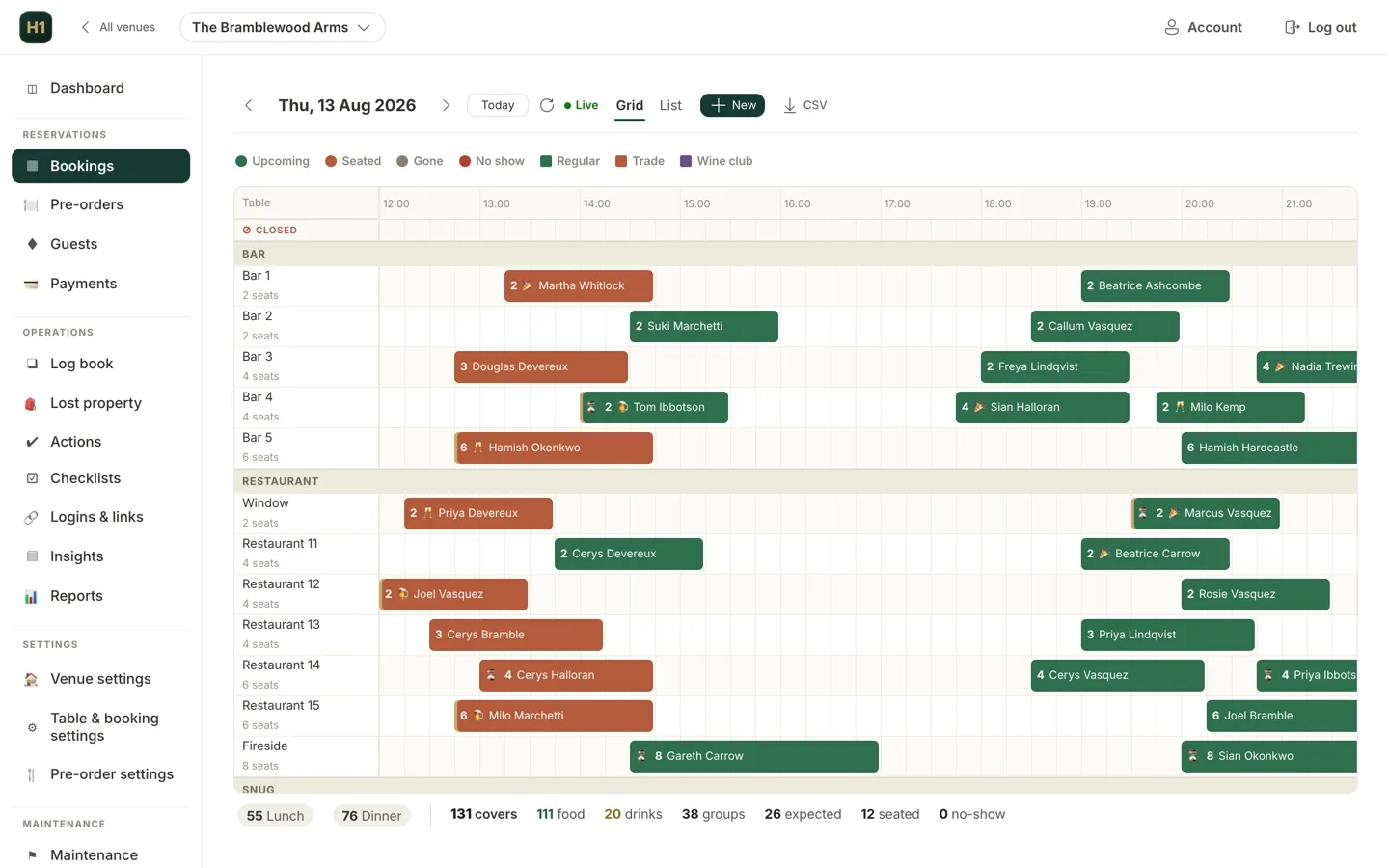
It allocates the way a good host would.
Describe the room once: tables, which ones join together and for how many, turn times per sitting, how many arrivals you can absorb in fifteen minutes. From then on the booking system works inside those rules instead of against them.
Table combinations
Arrival pacing per day
Turn times that vary by sitting
Last-booking times and slot blocks
Walk-ins on the same grid
Override when you need to
A branded booking widget your guests can actually use.
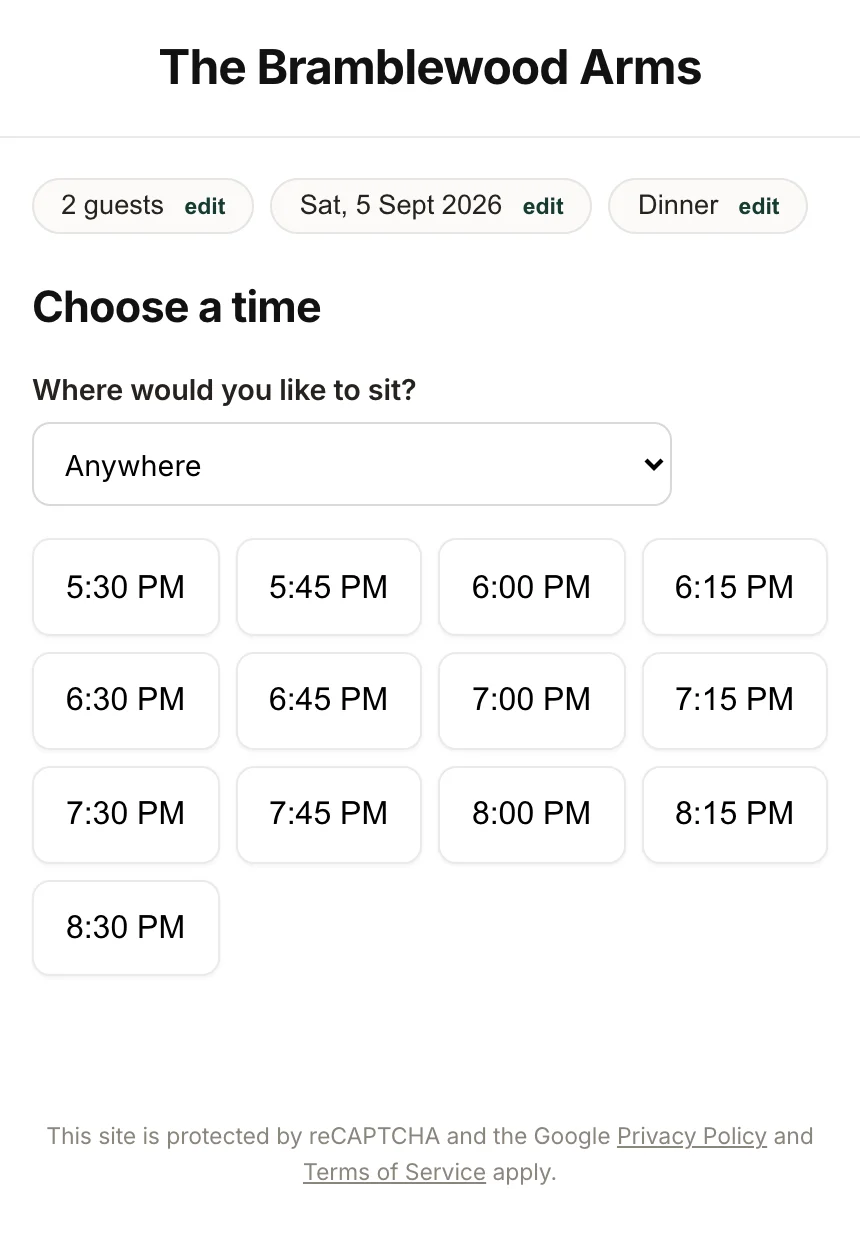
Party size, then date, then sitting, then time, with sold-out days greyed out before anyone picks them. It sits on your own site under your own branding, or on your own domain.
Sold-out days shown up front
Guests can choose where they sit
Occasions captured at booking
Special events with their own rules
Waitlist that does the chasing
Group pre-orders
Deposits and card details, without a separate payments vendor.
No-shows are the tax on being easy to book. The tools to stop them are part of the booking system rather than a bolt-on that bills separately.
Deposits per cover
Automatic deposit rules
Card on file for no-show fees
Policy-driven refunds
Paid extras and upsells
One reconciliation view
What to look for in a pub booking system
Most table booking software was built for restaurants with a fixed cover count and a maître d’ managing the door. A pub is a harder problem: the same room does drinkers and diners, the tables move, Sunday is four times Tuesday, and the person accepting the booking is often also pulling a pint. A booking system for a pub has to be safe when nobody is watching it.
That comes down to three things. First, the system needs a real model of the room, not a slot count: table combinations, minimum and maximum covers per table, and which areas can be used for what. Second, it needs pacing, because the failure mode in a pub is not an overbooked room but twenty-two covers arriving in the same ten minutes. Third, the pricing has to be flat. Per-cover fees punish exactly the growth you are trying to create, and on a busy December they are the largest software bill a pub pays.
Hendra One does all three, and the booking system shares its guest database with the guest CRM and marketing, its team with the rota, and its site settings with compliance. One login, one guest record, one flat price.
Pub booking system questions.
Does the pub booking system charge per cover?
+
No. There are no per-cover or per-booking fees, for you or for your guests. The whole system is £100 per site per month excluding VAT, which is the main reason operators move over from booking platforms that bill by the head.
Can it handle table combinations and turn times?
+
Yes. You describe your tables once, including which ones join together and for how many, and set turn times and arrival pacing per day. The diary then allocates within those rules, so an online booking cannot take a table your kitchen cannot serve.
Can we take deposits or card details to stop no-shows?
+
Yes. Deposits can be per cover, requested automatically by rules such as party size or day of the week, with a policy-driven refund on cancellation. You can also hold a card on file for a no-show fee, vaulted with Stripe rather than stored by us.
Will it work alongside our existing booking system while we move?
+
Yes. We import your future bookings and your guest database with consent status intact, and the widget can run alongside your old system until you are ready to switch it off. Most venues complete the move in under two weeks.
Can guests amend or cancel without phoning us?
+
Yes. Every confirmation carries a self-service link to amend or cancel, plus an add-to-calendar link, and automatic pre-arrival reminders go out without anyone touching them.
See it running on your own menus and your own tables.
A 30-minute walkthrough with someone who has run a service, not a sales deck.