Stop paying £400 call-outs on kit still under warranty
The register knows what you own, who sold it to you, when the warranty runs out and when it was last serviced. When something goes, the right number gets rung, and the service that keeps the warranty valid comes up before it is missed.
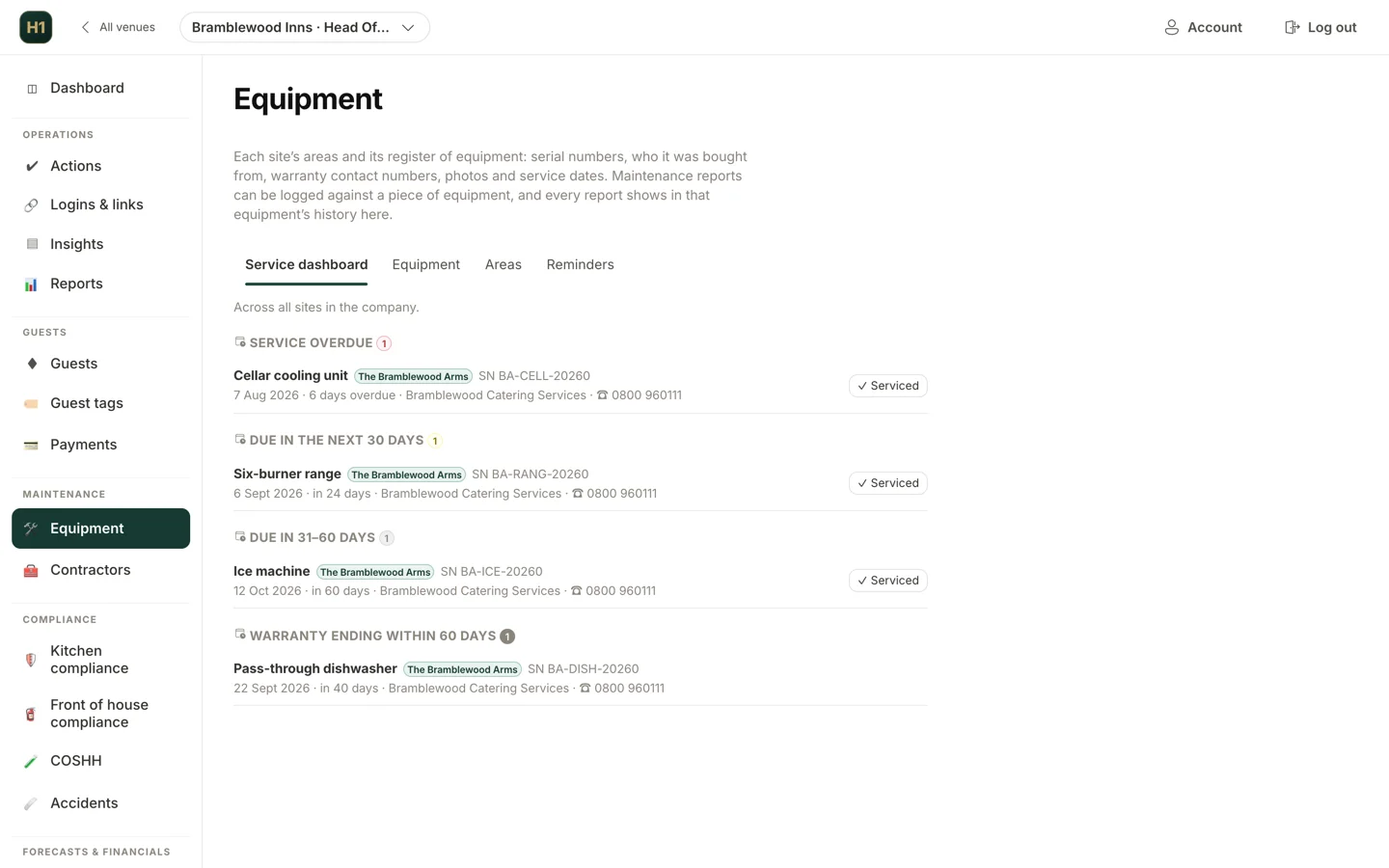
The service dashboard, from our demo company
An equipment register with the paperwork on each item
Nobody opens a spreadsheet of serial numbers when the fryer stops in the middle of service. They do open this, because it is where the fault gets reported.
Serial numbers, suppliers and warranty dates
The right number to ring
Photos, receipts, manuals and certificates
Service intervals and due dates
Overdue, next 30, next 60
Service-exempt items
The fault log, on the phone already in their pocket
Anyone on shift can report a fault in seconds. Managers see the whole list, give each one an owner and close it off, and the history stays attached to the piece of equipment. The same phone carries the day’s checklist, ticked off by name.
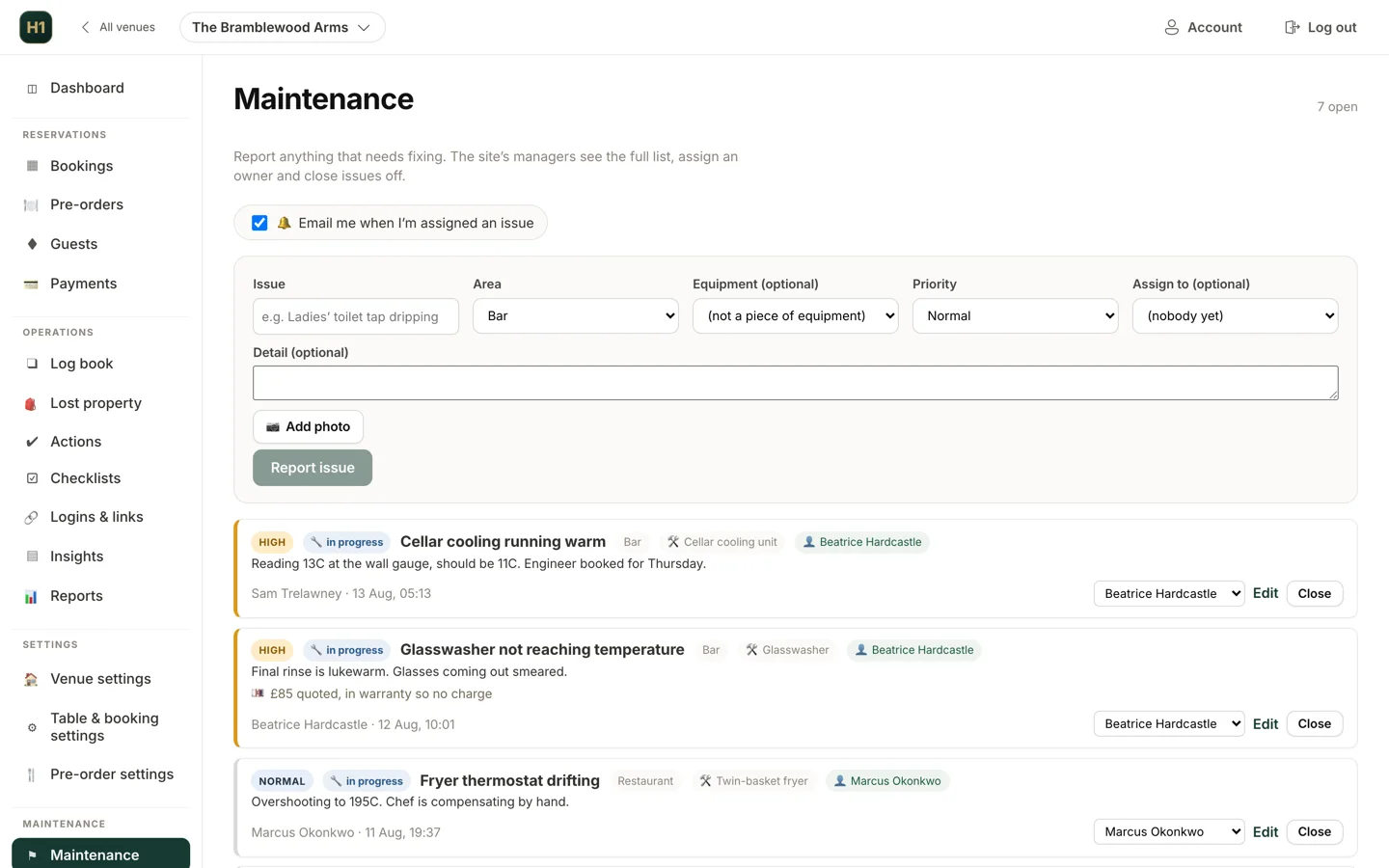
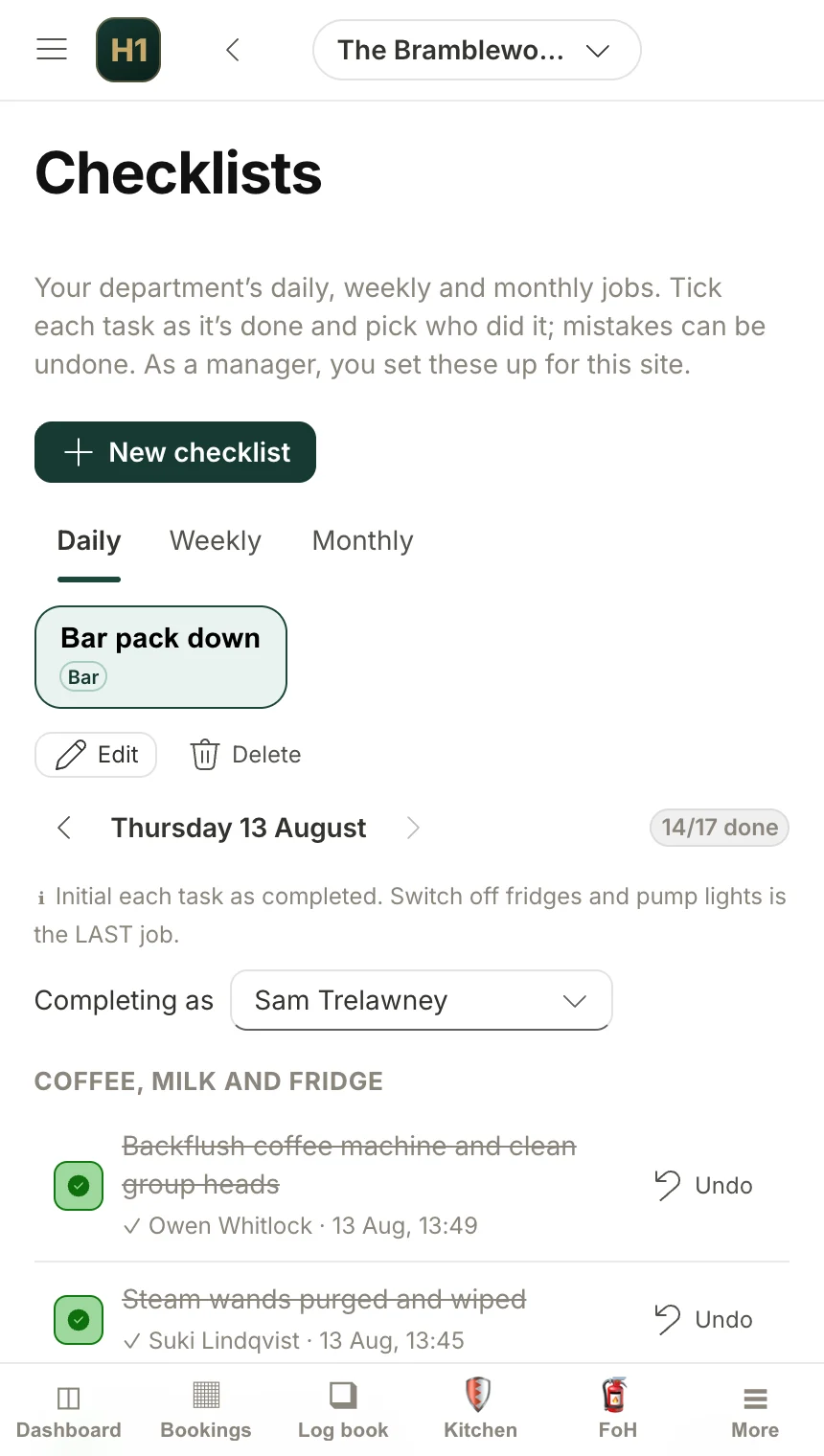
What happens to a fault once it is reported
Spend per fault
Linked to the equipment
Areas for each site
Contractors, and the jobs that come round every week
Most pubs keep no list of who to ring out of hours, and no proof that the weekly clean-down got done.
Contractors directory
Public contractor sign-up
Linked to the kit they look after
Department checklists
Starter sets in one click
Lost property register
The out-of-hours number, before you need it at 11pm
The electrician’s emergency number and call-out fee sit beside their NICEIC registration, and the gas engineer’s Gas Safe number is in the same list. A new trade adds themselves from a public link and waits for your approval.
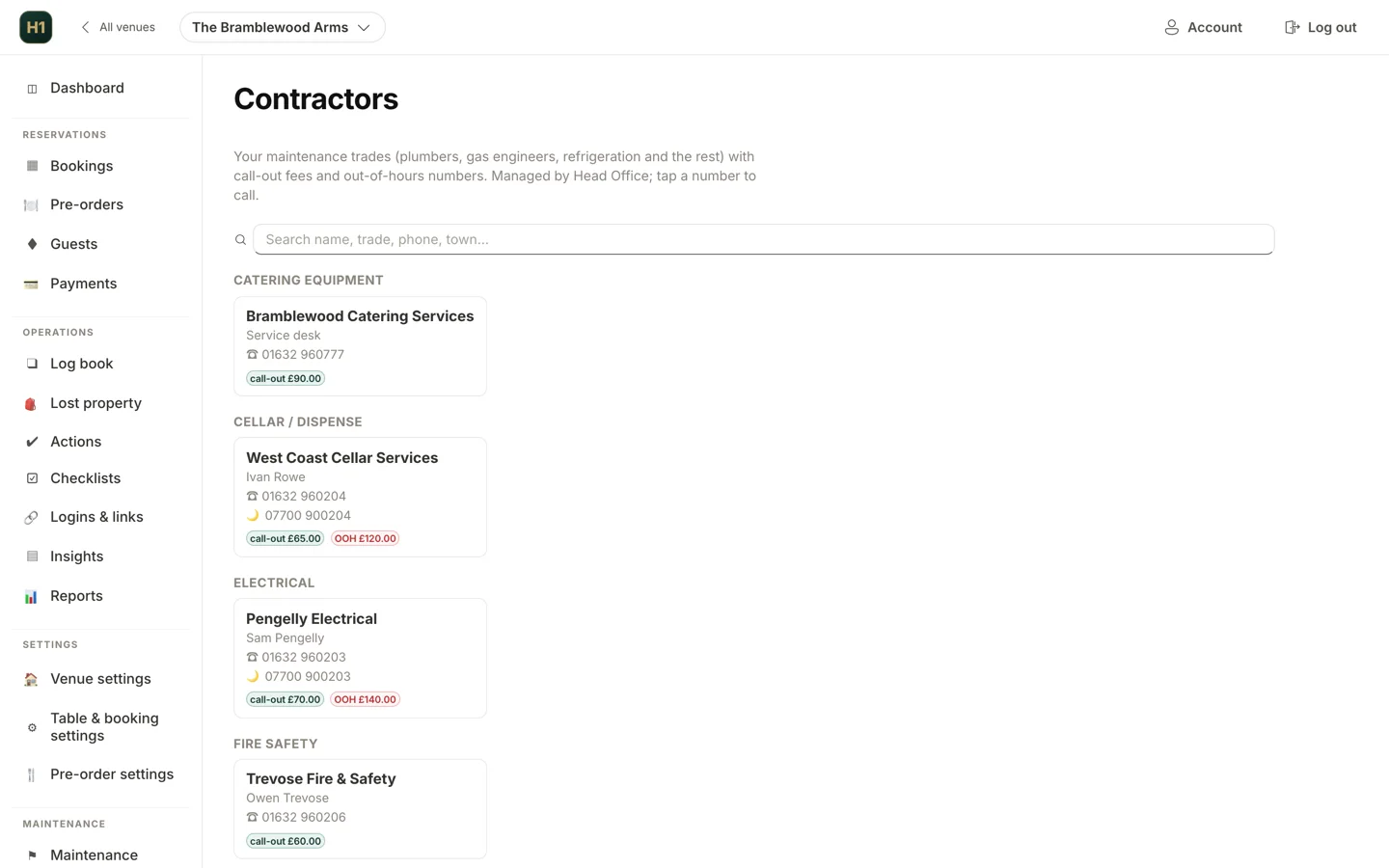
Why maintenance goes in the same system as everything else
Operators care about their kit. Pub maintenance software still rarely sticks, because a standalone maintenance app is one more login, and a fault needs reporting at exactly the moment nobody has time to go looking for it. So the fault gets shouted across the kitchen, and the only record of it is that someone remembers.
Put it in the system everyone is already signed into and that changes. The chef who spots a fridge running warm is already in Hendra One, logging the temperature that told them so. The org chart that decides who approves a holiday also decides who hears about the fault, and the fridge the fault is raised against is the same fridge the compliance module takes its readings from.
The equipment register sits at the middle of it. Each item carries its warranty, supplier and service interval. Catering equipment service reminders go out by email, and there is a Monday digest of anything overdue. Contractor management for pubs mostly comes down to knowing who to ring late on a Saturday, so the directory holds the out-of-hours numbers and call-out fees, new trades sign themselves up, and each one is linked to the kit they look after.
Maintenance, equipment and contractors come in the same flat £100 per site per month as the booking system, compliance records and rotas and team.
Maintenance questions
How does it stop us paying for a call-out on kit still under warranty?
The equipment register holds the warranty date and the supplier alongside the item. While a piece of kit is in warranty the record shows the number to call for a warranty repair rather than the general contractor, so the £400 call-out never gets booked in the first place.
Does it chase services, or just record them?
It chases. Each item has a service interval and a due date, with a dashboard at each site of what is overdue, due in the next 30 days and due in the next 60. Reminder emails go out, and there is a Monday digest of anything overdue.
Can contractors add themselves?
Yes. There is a public sign-up link you can give a new trade. They fill in their own details, including Gas Safe or NICEIC numbers, and the record arrives pending your approval rather than going live unchecked.
Is this separate from the compliance module?
They are different registers for different jobs. Maintenance covers equipment, faults, services and contractors. Compliance covers food safety, fire, accidents and COSHH. Both are included at the same flat price, and both escalate by role from the same org chart.
The rest of Hendra One
All of it is in the same £100 a site.
See it with your own tables and menus
A 30-minute walkthrough with someone who has run a service. Email us and we will arrange a time that suits you.