A pub CRM that turns one visit into the next one.
Your booking system already knows who came, how often and what they were celebrating. A CRM should use that. Birthday vouchers, win-back offers and milestone rewards go out on their own, to guests who genuinely visited, and you see what came back through the door.
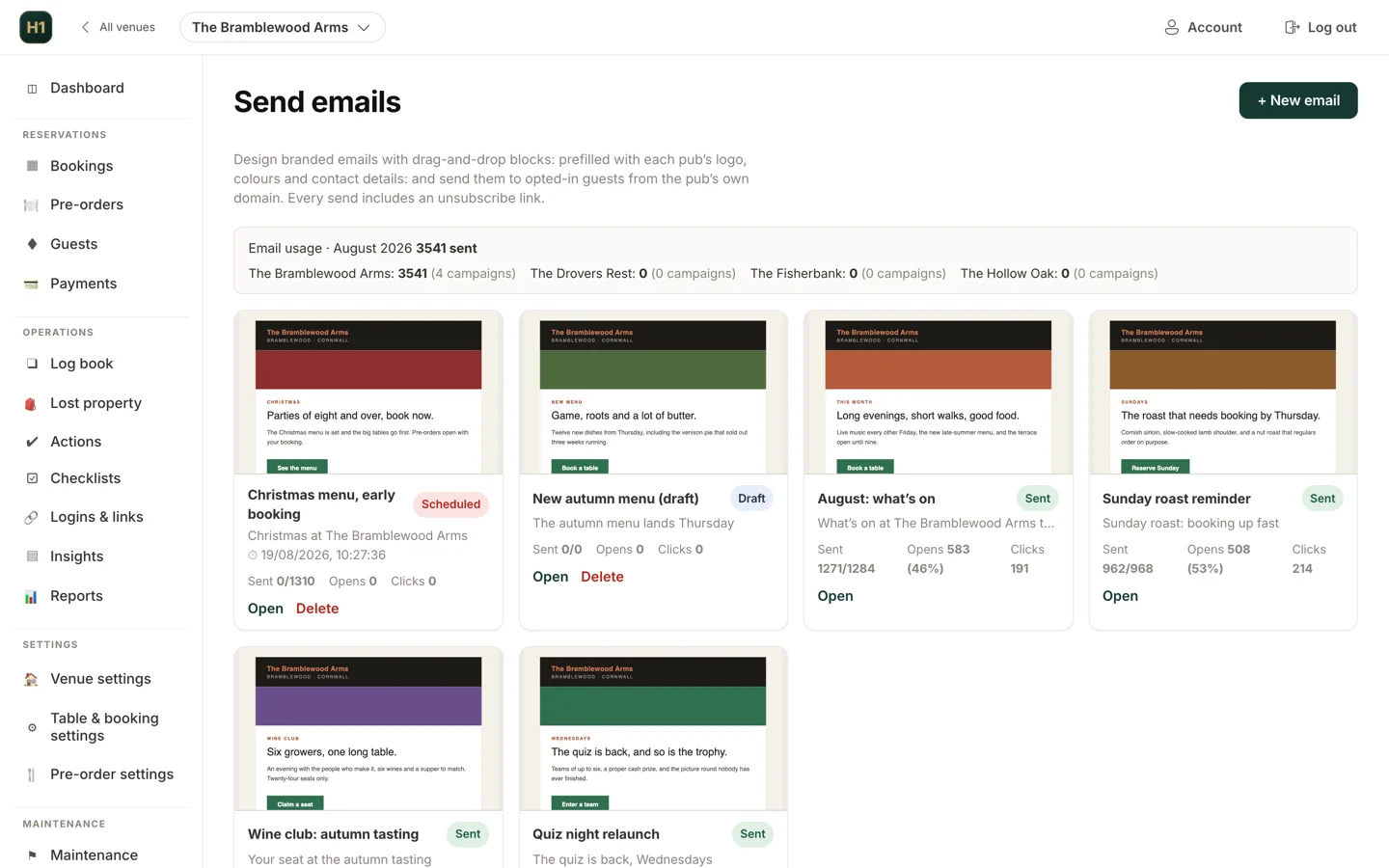
One guest record, across every site you run.
A guest who books the town pub in March and the country one in August is one person with one history. That is the whole point of a CRM, and it is where separate booking and mailing tools always fall apart.
Visit history that builds itself
Tags, notes and dietaries
Unique guest numbers
Duplicate detection that never auto-merges
Company-wide or site-only views
Exportable, always
Who is a regular, who has drifted, and who you may email.
The segments are worked out for you and kept current: VIPs on five visits or more, regulars, new guests, anyone lapsed past ninety days, and who has actually opted in. Every one of them is a list you can send to.
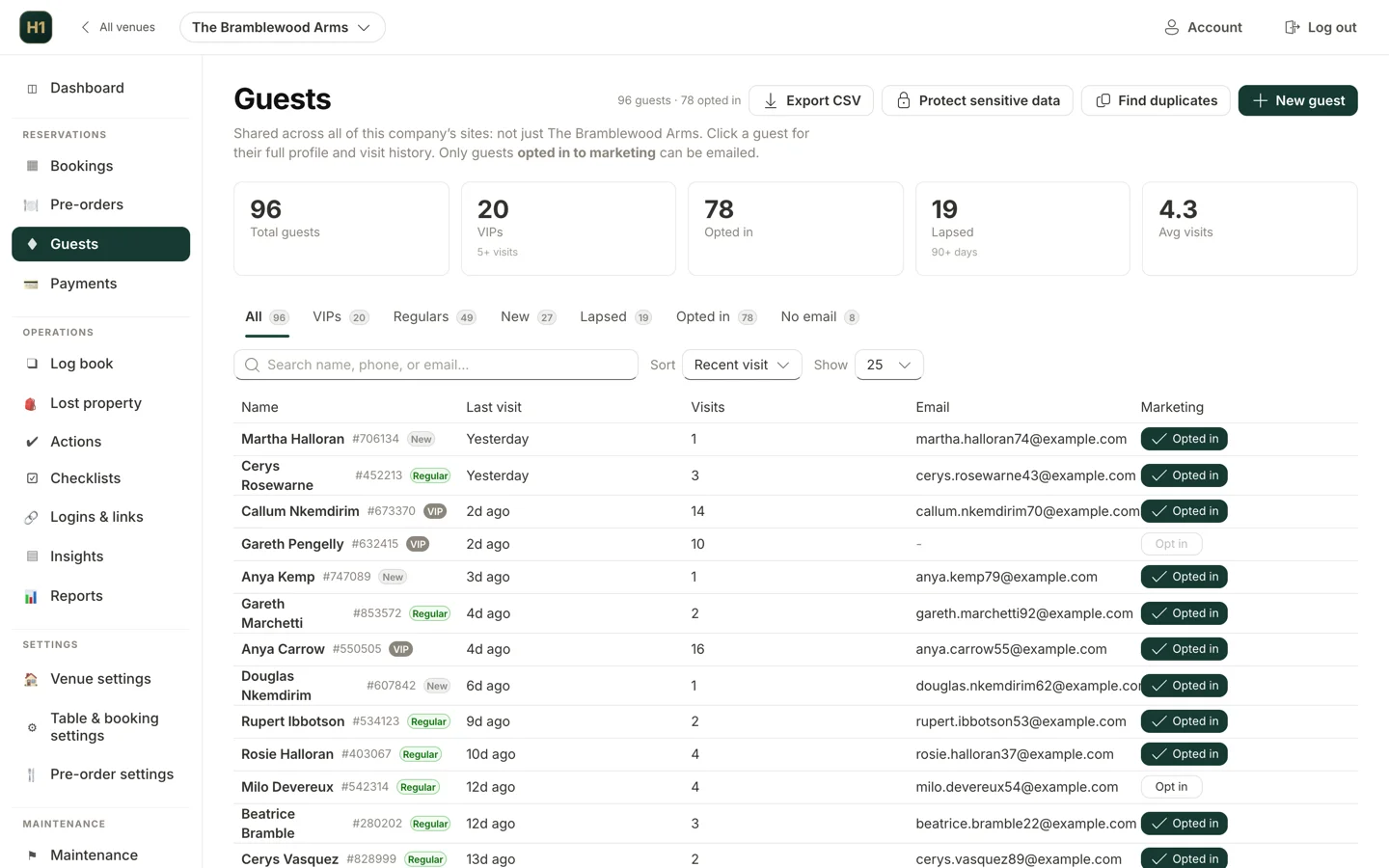
A list is a snapshot. A segment is a standing question.
Export a list of lapsed guests today and it is wrong by Friday. These are recalculated every time you look, so the campaign you send on Thursday goes to the people who are lapsed on Thursday.
VIPs, regulars and new
Lapsed, on a rolling window
Opted in, and no email
By site, or across the estate
By tag
By visit recency and count
It markets while you are pulling pints.
Eight triggers, set once. The system watches the guest database and sends when the condition is met, respecting quiet hours and opt-out status.
Lapsed guests
Birthdays, including in advance
Visit milestones and every Nth visit
First-visit welcome
Post-visit thank-you
Tag-based
Vouchers that tell you what actually worked.
Open rates are a proxy. A redeemed voucher against a booked table is the number that matters, and it is the one most hospitality marketing tools cannot give you because they never see the booking.
Single-use voucher codes
Redeemed in the venue
Open, click and delivery stats
Drag-and-drop campaign builder
Feedback with guest recovery
Review requests, timed sensibly
The consent trail, and the ability to actually delete someone.
Guest marketing is the part of a pub's data handling most likely to go wrong, because the list is usually a spreadsheet nobody owns. Consent here is a field on the guest with the date it changed, and erasure is a button rather than a database job.
Consent recorded, with the date
Unsubscribe on every send
Subject access and erasure
Why a pub CRM beats a mailing list
Most pubs that do any marketing at all are running a general email tool with a list that was typed in from a paper sign-up sheet. It has three problems. The list decays, because nobody updates it when a guest changes address or stops coming. The segments are guesses, because the tool has no idea who actually visited. And the consent position is fragile, because there is rarely a record of when or how each person opted in.
A CRM attached to the booking system fixes all three by construction. The visit history is a by-product of taking bookings, so it is current without anyone maintaining it. Segments like “came three times last winter and not since” are a query rather than an estimate. And consent is captured at the point of booking with a timestamp, which is what you need if anyone ever asks.
In Hendra One the CRM is the same database the booking system writes to, shared across every site under one head office, and included in the flat £100 per site per month rather than sold as a marketing tier.
Pub CRM questions.
What is a pub CRM?
+
A pub CRM is a guest database that records who has visited, how often, what they spent time on and what they told you, and then lets you contact them lawfully. The difference from a general mailing list tool is that the visit history comes from your booking system automatically, so the segments are real rather than self-reported.
Is the guest database shared across all our sites?
+
Yes. One guest record spans the whole company, so a guest who books at two of your pubs is one person with one visit history, not two half-records. Each site still sees its own bookings, and permissions control who can see the company-wide view.
Do we own the guest data?
+
You do. You are the data controller and Hendra One is your data processor, working strictly on your instructions under a Data Processing Agreement. The database is exportable at any time and is never something we can independently market to or take away.
How does it handle GDPR and unsubscribes?
+
Consent is tracked per guest with a timestamp, every marketing email carries an unsubscribe link that takes effect immediately, and there are built-in tools for subject access exports and right-to-erasure requests. Automated emails check opt-out status before they send.
Can we tell which campaigns actually brought people back?
+
Yes. Attach a single-use voucher code to any automation. The code is redeemed in the venue against the booking, so you see opens and clicks and, more usefully, how many of those turned into a table.
See it running on your own menus and your own tables.
A 30-minute walkthrough with someone who has run a service, not a sales deck.